The Car Bonnie and Clyde Loved So Much They Died in It
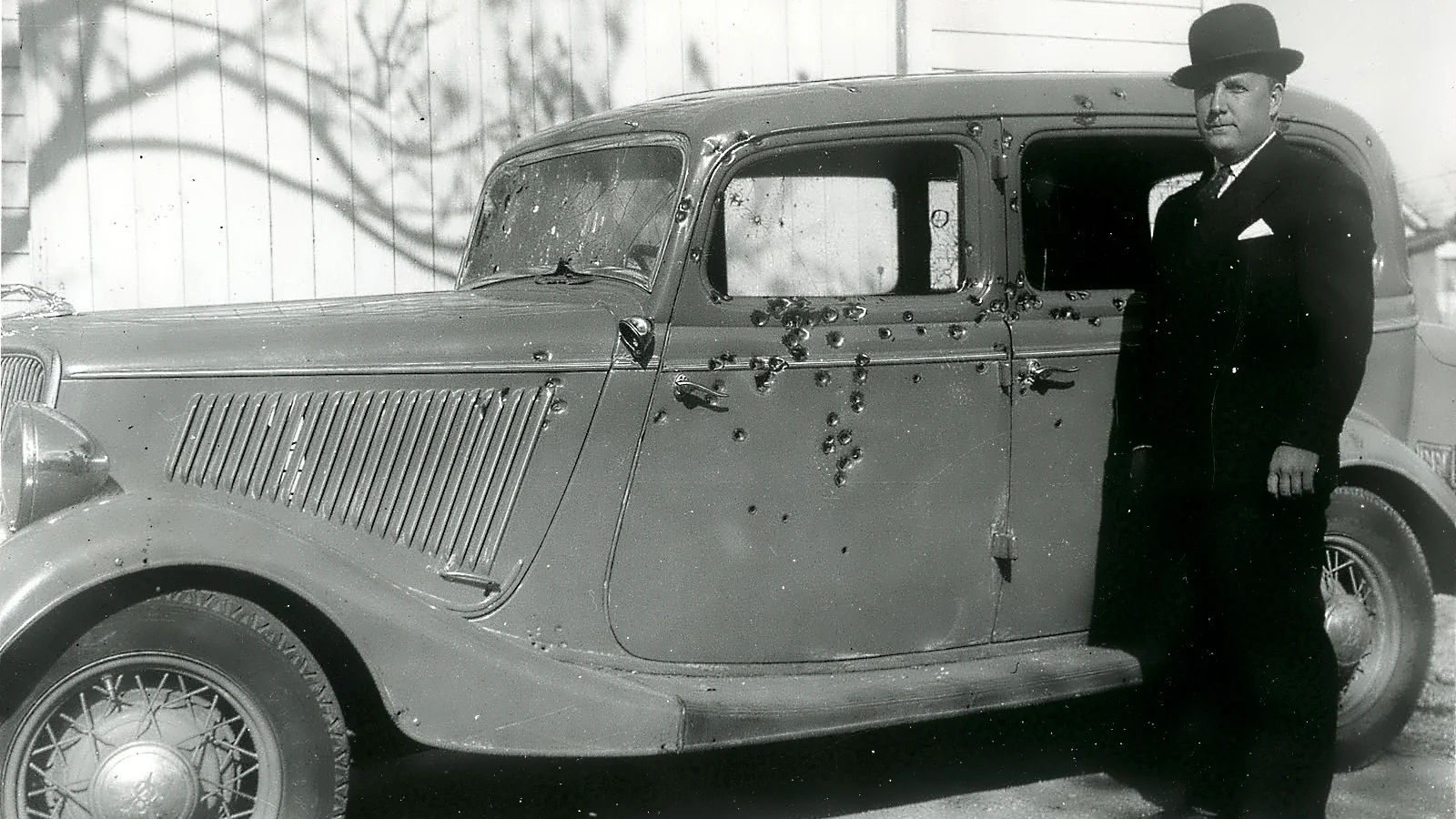
On the morning of May 23, 1934, a new Ford V8 sedan sped along a quiet Louisiana country road. Ahead, a disabled truck blocked the road. The Ford slowed and swung around it. Before the car could regain speed, a burst of gunfire hit the Ford. The now bullet-riddled Ford coasted silently to a stop.
So ended the murderous crime spree of Bonnie and Clyde. However, if anyone thought this was the end of the road for Bonnie and Clyde, they were very mistaken. The criminal duo became more notorious in death than in life. Their exploits were glamorized and fictionalized in many newspapers, movies and books.
There is no question that it was the automobile that allowed smash-and-grab criminals like Bonnie and Clyde to exist. Their 1934 V8 Ford easily carried a large stash of guns and ammo, which included 3 machine guns, 2 sawed-off shotguns, and 13 handguns. Plus, a large assortment of ammunition. Other items discovered were numerous number plates, 2 suitcases, and a saxophone.
With the Ford they could move freely about the countryside unnoticed. The car’s steel body easily defeated .38 Special and .45 ACP rounds used in police sidearms and Thompson machine guns. This allowed the duo to safely escape several encounters with the police. Several of the lawmen used high-powered hunting rifles to stop the Ford. Interestingly, the car was mechanically undamaged.
Clyde’s car of choice was the V8 Ford. He even sent a letter, probably written by Bonnie, to Henry Ford praising the V8 Ford’s virtues. Bonnie and Clyde dressed and acted like a well-to-do young couple. The fast, reliable, and good-looking V8 Ford was the perfect vehicle for the style-conscious crime duo. It allowed them to “case” their targets without looking suspicious and make a swift getaway. When Clyde “borrowed” the Cordoba Gray 1934 Ford, it was just a month old. The owner had left the keys in the ignition. Amazingly, the duo rolled up 7,500 miles in the 26 days they drove it.
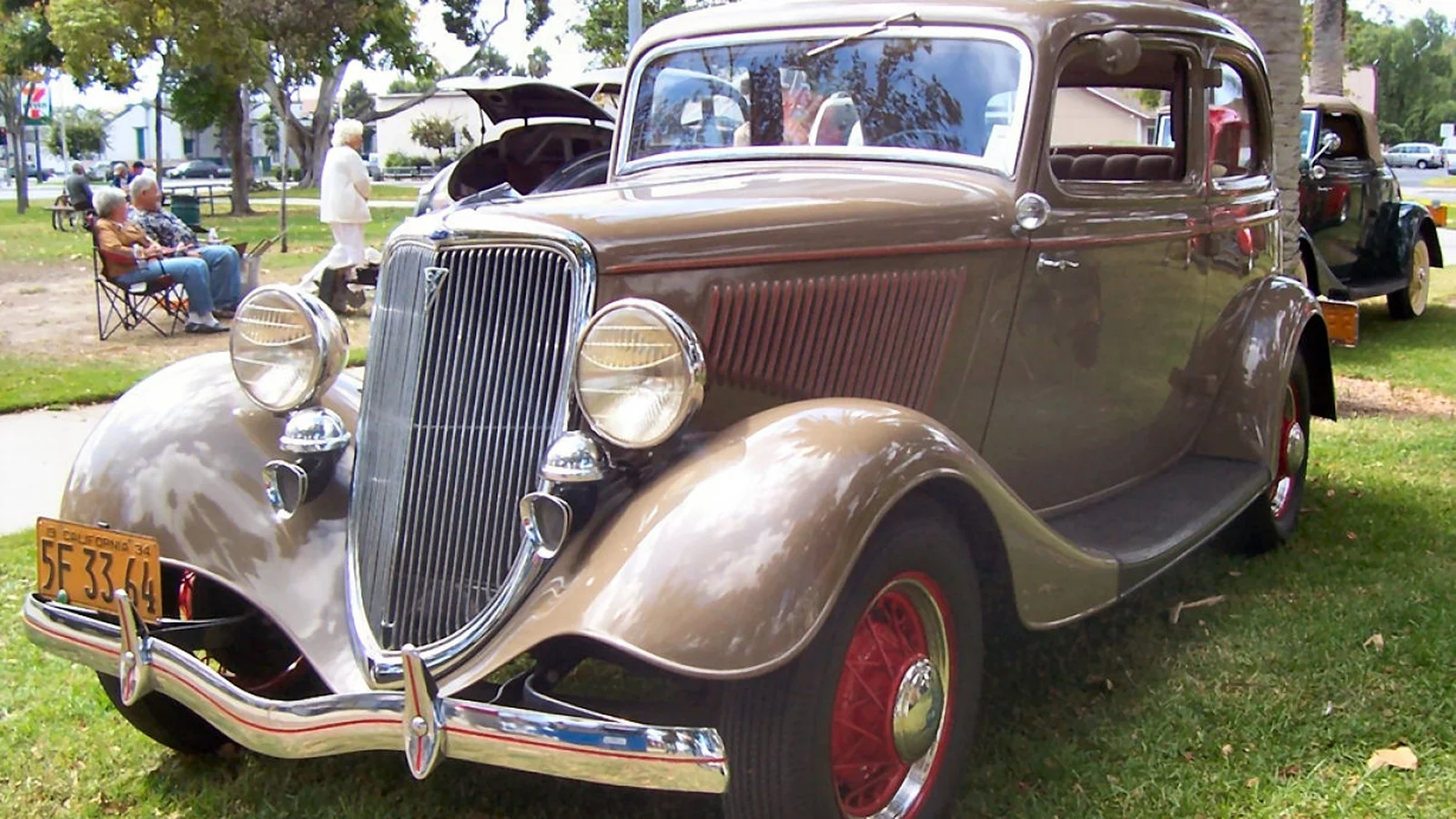
This 1934 Ford Fordor De Luxe model had upgrades of dual tail lights, dual chromed horns, hand applied pin-striping, and front door arm rests. It also had the optional Greyhound hood ornament. The Ford sold for around $850.00 or $20,660 in today’s dollars. It also had an accessory trunk attached to the rear of the sedan. This offered more storage space. Hey, they needed some place to stash the suitcases and saxophone.
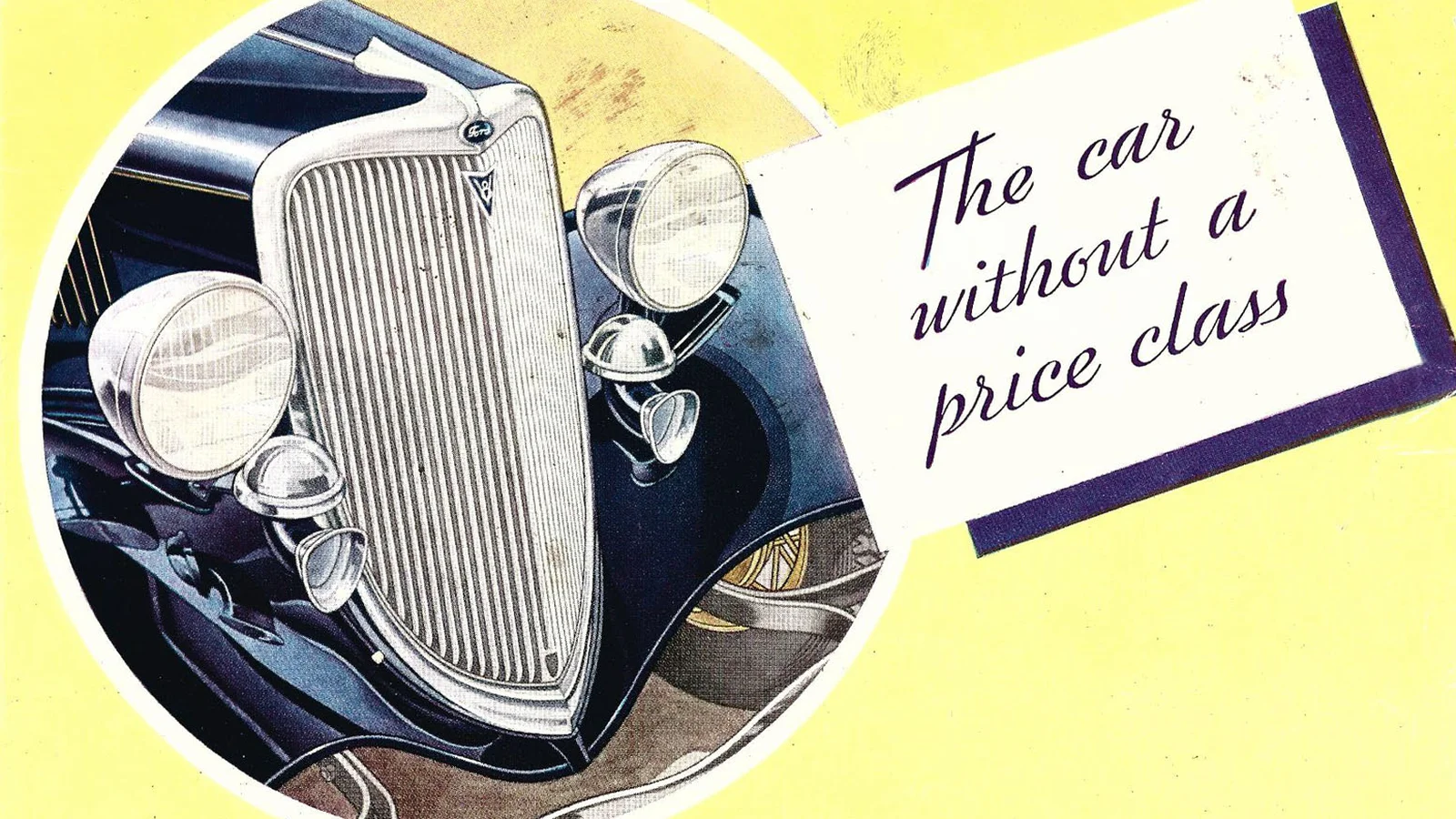
Clyde was both a skilled driver and car thief. The 1934 Fords were his favorite automobile; they were also one of the hardest cars of the era to steal. Fords had a keyed lock built into the steering column. It locked both the steering wheel and ignition switch.
Additionally, starting the Ford was more complicated than a modern car. After unlocking the steering wheel and ignition switch, you needed to grab the choke knob on the dashboard and pull it out. Next, make sure the car’s transmission was in neutral and/or the clutch unengaged. Then, place your foot on a round pedal just right of the gas pedal. That will engage the starter and hopefully start the engine. Release the parking brake and you are ready to go. Once the engine was warmed, the choke was pushed back in. Of course, if you left the keys in the ignition, the theft was much easier. Otherwise, Clyde would have had to jimmy the car’s lock.
Also, Clyde might have used the parking brake lever to make a bootlegger turn. I’ve never attempted this maneuver. However, by locking up the rear brakes and twisting the steering wheel quickly the car will slide sideways. Hopefully, still on the road and headed in the opposite direction.
If you expected the typical V8 roar, there wasn’t any. Actually, at idle it was hard to tell if the engine was running. On the dash there was a throttle knob that could set the speed of the engine. You could use it to warm up the engine or as a crude cruise control. As odd as this sounds, it could smooth out the ride quality on rough roads. I tried that with a 1936 Ford, and it really did work. Except for the steering lock, this was pretty much the standard operating procedure for most vehicles of the era. While road testing the 1936 Ford I found a shortcoming common on that era’s Fords. Namely, their mechanical braking system. Most 1930s cars had the much superior hydraulic brake system. Going down a steep hill I pushed as hard as I could on the brake pedal. Nevertheless, I ended up in a hay field at the bottom of the hill. Fortunately, I was not going fast enough at that point to damage the car. So ended the joy ride of a stupid fifteen-year-old.
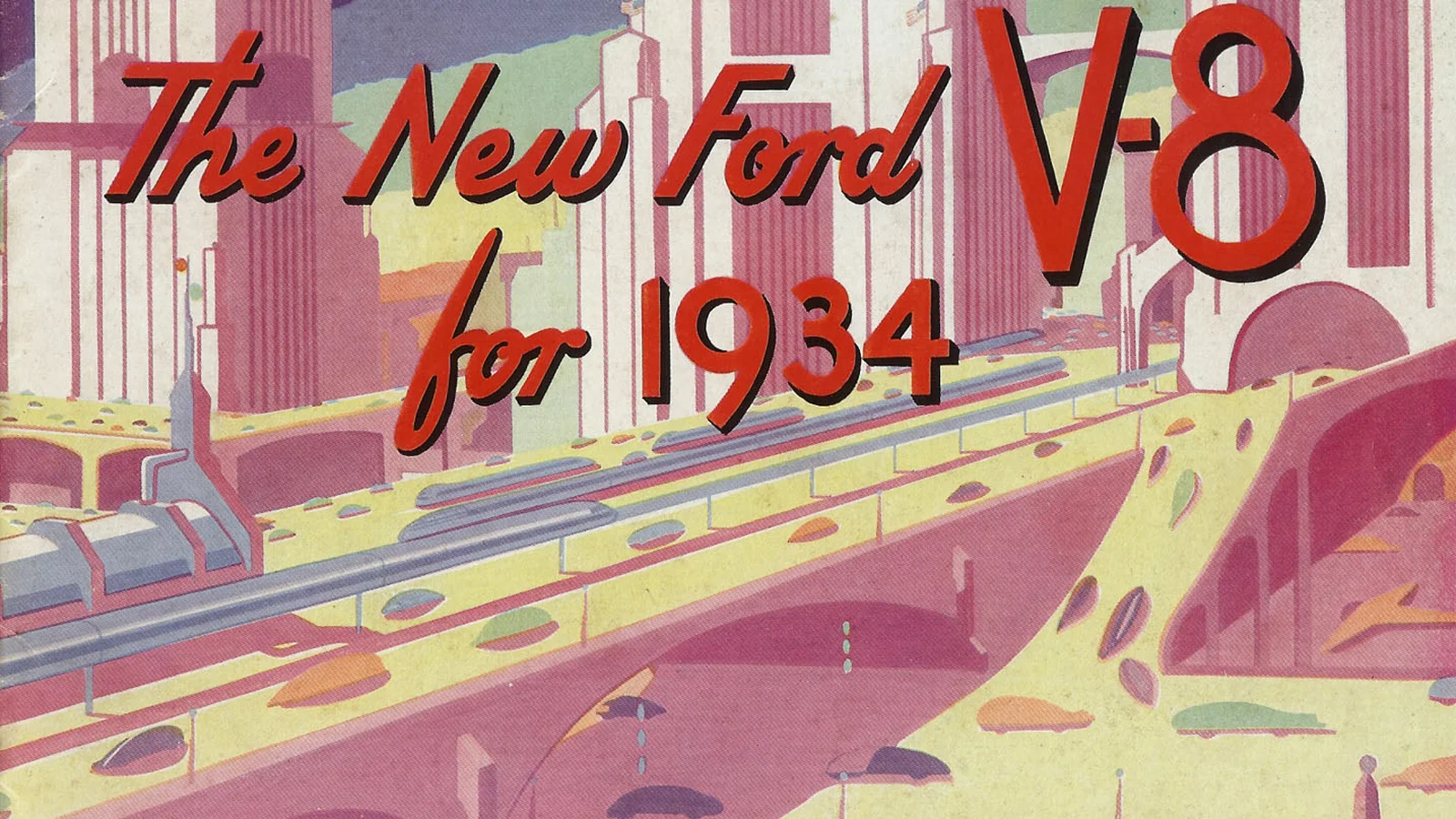
If you’re going to steal a car, why not the stylish 1934 Ford? Actually, it is still highly sought after by restorers and hot rod builders. Henry Ford’s son, Edsel, was involved in designing Fords and Lincolns. He used European styling cues for their designs. The 1934 Ford’s sleek, modern design was very attractive. My father was a huge Chevy fan, yet at the top of his bucket list was a 1934 Ford Roadster. Although he had a 1934 Chevy, it was the Ford he drove most often.
Moreover, its flathead V8 engine set the Ford apart from its competition. Before Ford introduced the V8 engine, they were only found in luxury automobiles, like Cadillac and Lincoln. Accordingly, the 1934 Ford could easily outrun most cars found in law enforcement use. Kind of nice to know if your career path included smash and grab robbery. With the stock 30 HP engine, the Ford could hit 65 mph. That was fast considering the road systems of the era. Though the Ford V8 was easy to “soup up,” the Bonnie and Clyde car was unmodified.
One might assume the bullet-riddled wreck would end up in the scrap yard. However, that was not the case. The original owners of the Ford planned to make a buck by using it as a traveling side show. But first they had to reclaim the car from the Sheriff’s department. Fortunately they won the court battle, and it was returned to them. Nevertheless, they still had to deal with many of the imposter “Death Cars” that kept popping up. It was real easy to shoot holes in a 1934 Ford. Tired of all the legal wrangling, they sold the car. It changed hands several times over the years. At some point it ended up in the Princeton Auto Museum in Princeton, MA.
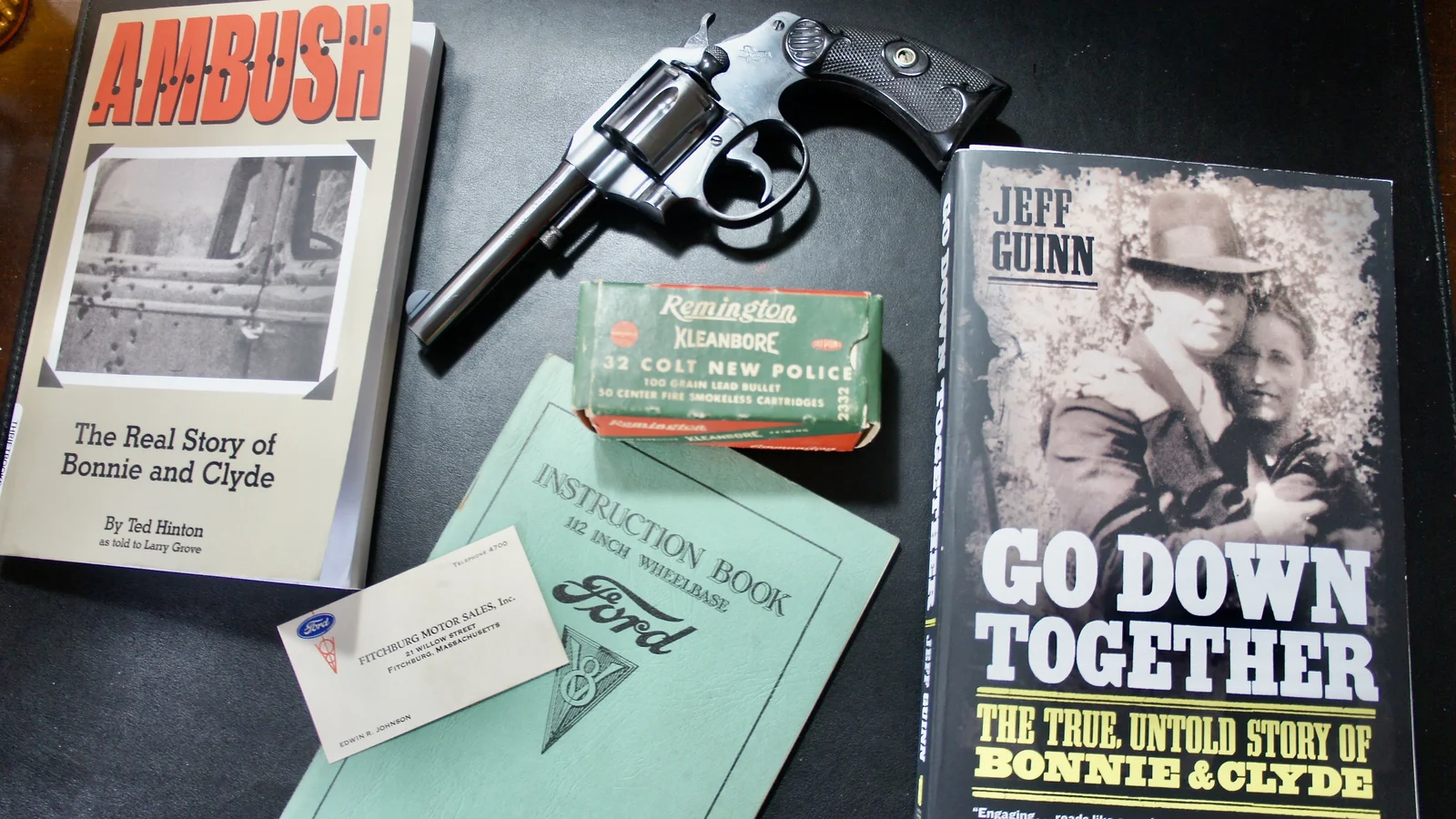
I was at the Museum in 1973 when the Bonnie and Clyde car came up for auction. A client of mine wanted it for his auto museum. The hammer price was a then-whopping $175,000. In today’s dollars that would be $1,300,000. Who would guess the well-ventilated 1934 Ford would go for that kind of money? My client bought several other cars that day, but was outbid on the Ford.
In 1988 the Bonnie and Clyde 1934 Ford went on display at Whiskey Pete’s Casino in Primm, Nevada. From photos I have seen, it actually looks pretty good for its age despite the many bullet holes. Moreover, it is said to be in running condition and has participated in vintage car events. Unfortunately, Whiskey Pete’s and all the other Primm Valley Resorts and Casino locations are now permanently closed as of July 6, 2026. There is no news on the fate of the Bonnie and Clyde car. Nevertheless, today the 1934 Ford’s estimated value is several million dollars. Who says crime doesn’t pay?