5 Slate Truck Myths That Fall Apart Up Close
Back when I got started in this career 30-something years ago, the idea of a fresh new automaker on the scene was virtually impossible to think about. There wasn’t anyone in the 1990s and early 2000s that was going to be able to break into such a calcified, protective market.
Then the 2010s arrived and it feels like we have a new manufacturer on the horizon every year. One of the latest is Slate, and I’ve been eager to see what it was all about for quite a while now.
Last week, I finally got to see it and had some thoughts, especially regarding a lot of the keyboard warrior online chatter around it and it seemed like a good time to bust a few myths about it:
Myth #1: “iT’S toO ExpENSiVE!!1!! iT ShoulD OnLY Be $15,000!!!!11!!”
The original pitch for the base-level Slate pickup was that it was going to be just under $20k. Which it would’ve been, had we not been forced to dump any tax credits for being an early adopter of a new technology from a new manufacturer. Tesla was built on tax credits, but now that door has temporarily slammed shut.
So now it’s $24,950. There are currently seven new vehicles with a base MSRP under the Slate pickup’s base price. Zero of them have a bed. Zero of them are EVs. 100% of them are sedans.
If you want a pickup, your next cheapest choice is the Maverick (which I love) for $27,145, but that’s with the 2.0-liter EcoBoost. With the hybrid drivetrain I’m interested in, that’s $28,145. In 2021, that exact vehicle was $19,995.
But that’s only part of the story here. What’s important is to look at what the Slate actually competes with, and that is nothing. There isn’t a single other vehicle in its class available for sale from any manufacturer doing business in the United States.
It most directly competes with a pickup that hasn’t existed in this country for quite a while now: A rear-drive, bare-bones, regular cab. I had one of those in 1985. It was a “Nissan by Datsun” 720. I bought it used and paid $5,000 for it. New, its base MSRP was $5,999.
Seems cheap, but it wasn’t in 1985. If I adjust for inflation, that 720 would cost $19,159, which I admit is still about $5,000 less than the Slate.
But what did you actually get for your $5,999? Manual steering. Manual windows. No radio. No air conditioning. No air bags. No traction control. No stability control. No cruise control. Single speed wipers.
With the Slate, you get power steering and A/C, but you also get traction control, stability control, auto emergency braking, six airbags, remote keyless entry, a backup camera, pedestrian identification, auto high beams and forward collision warning, literally thousands of dollars of safety technology that wasn’t available at ANY price in 1985, let alone $5,000.
Myth #2: “iT’s BeD iS USleESS!!!1!!”
Again, compared to WHAT? I concede that an F250 has a bigger bed, but this truck isn’t that. If I compare it to the Datsun 720 I had, the bed of which I used more or less constantly while I was in high school and college working odd jobs, its use case is a lot more clear:
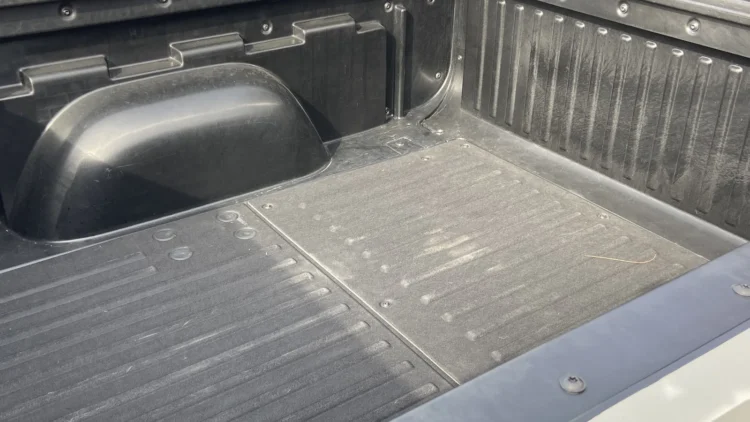
The base pickup I had was the short bed, which was 73.8 inches long, 60-ish inches wide and 15.5 inches high, for a total bed volume of about 38 cubic feet. The Slate has a total bed volume of 35.1 cubic feet, but it also has a 7.0-cu.ft. lockable storage area under the hood, which means that its overall cargo volume is about 4.0-cu.ft. more than my truck offered.
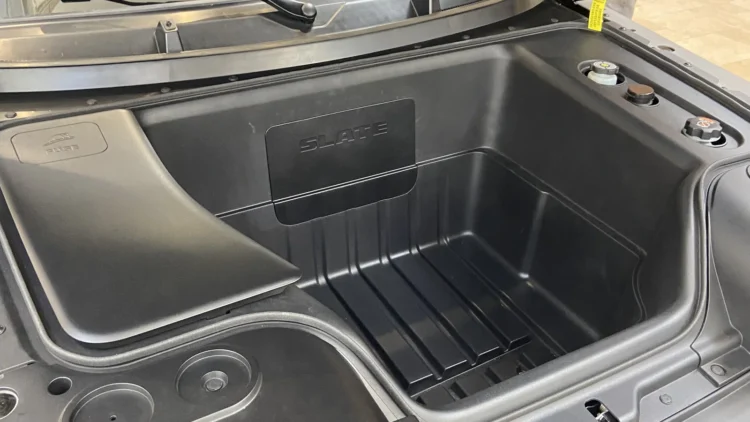
It also has a higher payload capacity. My Datsun had a payload capacity of 1,100 pounds. The Slate beats that by 450 pounds.
Myth #3: “YoU Can’T ToW AnYTHinG!!!1!!”
One of the things I want to be able to do with any compact pickup is tow a boat. Right now, I’ve just got a 14-foot aluminum jon boat with a trailer and six horse Evinrude, but that’s like towing nothing. My son can easily tow it with his clapped out 2010 Saab 9-3.
But eventually, we’d like to have something like a 15-foot Boston Whaler, a heavier boat, because they’re made out of fiberglass. The current Boston Whaler Montauk is 1,050 pounds. Add about 250 pounds for the maximum 60hp engine it can be equipped with. Then add 600 pounds for a trailer. You’re up to 1,900 pounds.
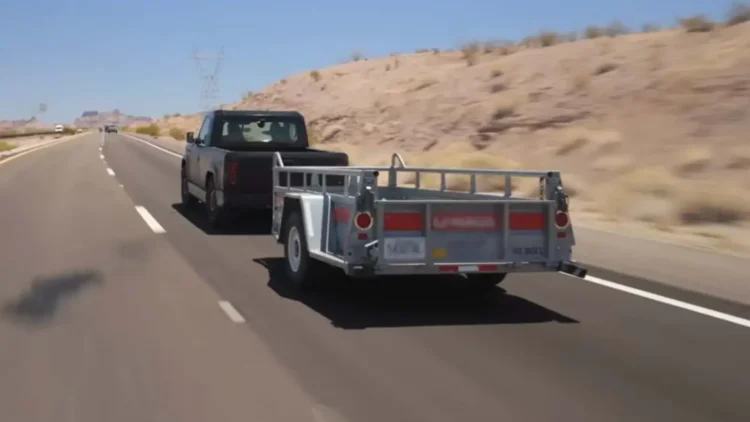
That would’ve vastly overwhelmed my Datsun by about 900 pounds, unless I wanted to add trailer brakes. In the pickup configuration I’d purchase, the Slate has a 2,000-pound towing capacity, unbraked.
Myth #4: “ItS To SMaLL inSIDe!!!!!!11!!!!”
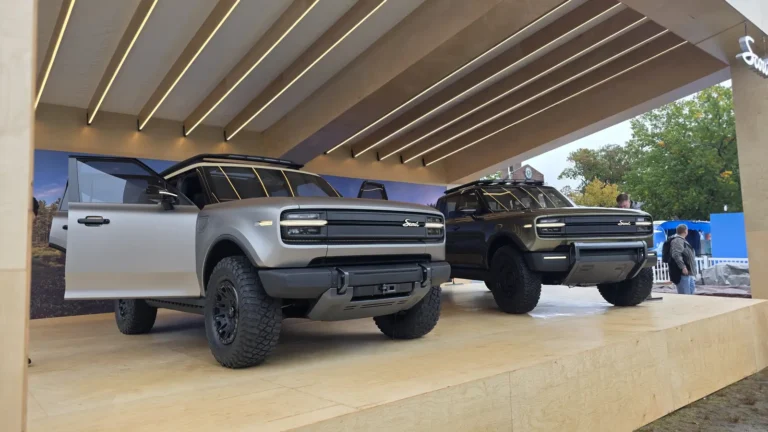
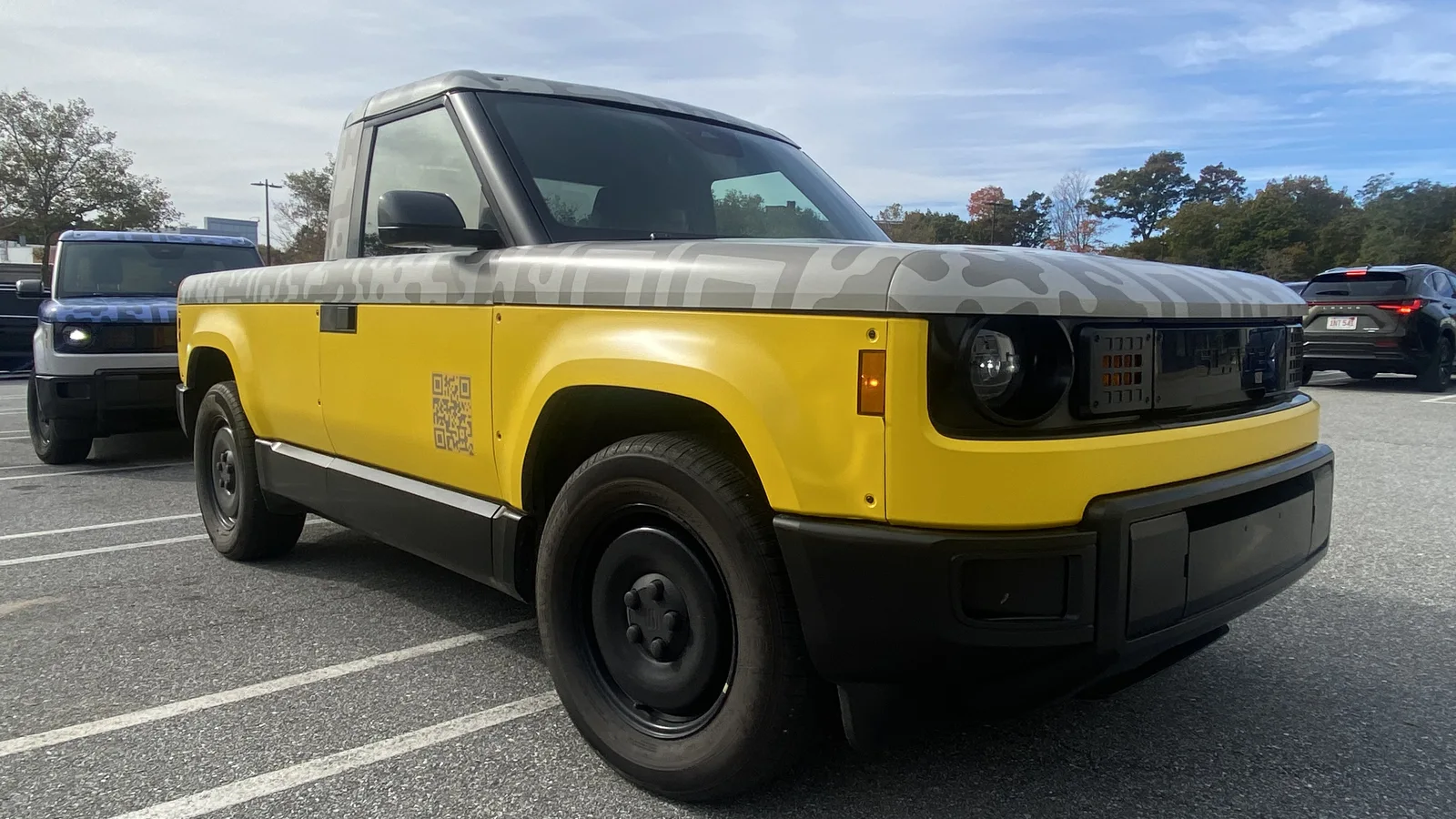
The first thing you’ll notice when you’re inside the Slate is how ginormous the cab is considering the overall size of the vehicle. Like the original Alec Issigonis-designed Mini, it’s hard to reckon just how much room is inside when you look at it from the outside.
I’m not tall. I’m 5’10” on a good day. But in my Datsun, if I wore a hat, it was touching the headliner, and you had better have been intimate friends with whomever you were riding with, because your shoulders were touching.
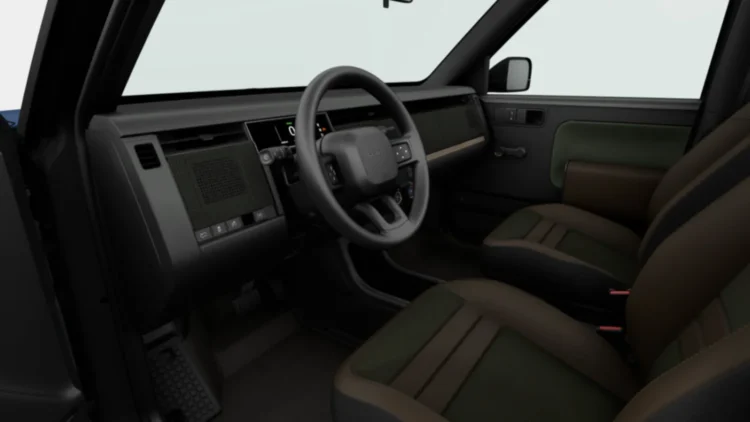
The Slate has a shocking amount of headroom. I looked at the guy I was riding with, who appeared to be about my height, and I’d estimate that he had at least six inches of headroom. There are videos of drivers inside who are 6’8” and had no issues with headroom.
Unlike my pickup, which had a bench seat, the Slate is equipped with two supportive, comfortable bucket seats, and there’s a good amount of space between you and your passenger.
Myth #5: “iT HaZ PoRE RaNGE!!!!!!!!!!!!!!!111!!!!”
I don’t know where people are going where they think 205 miles on a full charge is poor. I’m currently driving a Lexus RZ450e which has a maximum range of about 240 miles. I had enough range to get from the western suburbs of Boston to Portland, Maine, with a 60-mile buffer. I charged it while I was in city hall renewing my registration.
205 miles is more than adequate for the kind of driving I do normally. I’m not often driving across the country towing a car trailer. The last time I did that was 2006. If I have to do it every 20 years, I can always figure out how to. But for the 7,300 days between, the Slate would do the job for me just fine.
The other nice thing about the Slate, unlike something like the Ford Lightning, is that the battery is small at 65kWh. It’s counterintuitive, but I would prefer a smaller battery. A while back, I drove a Hyundai Kona EV with a 65kWh battery pack and was able to get enough of a charge overnight to get to about 80% from nothing more than a 120V standard wall socket, without the need of a Level 2 charger. Obviously, I would want a Level 2 charger if I owned a Slate, but it’s nice to know you can plug it into a wall when you’re renting a house on vacation, for example.
There are a lot of things that are still yet to be seen with Slate. I want to know more about how they’re serviced (though most EVs don’t require it), how close to accurate the range indicator is (Ford’s Mustang Mach-E seems to be on the money. The Subaru Solterra, not so much), and what its overall longevity and reliability looks like. For those things, we’re going to have to wait and see.
But for these common complaints about the Slate before anyone has even sat in one, I’m satisfied that the truck is going to do what I want it to.