MIT’s Bryan Reimer on Building AI That Helps Drivers
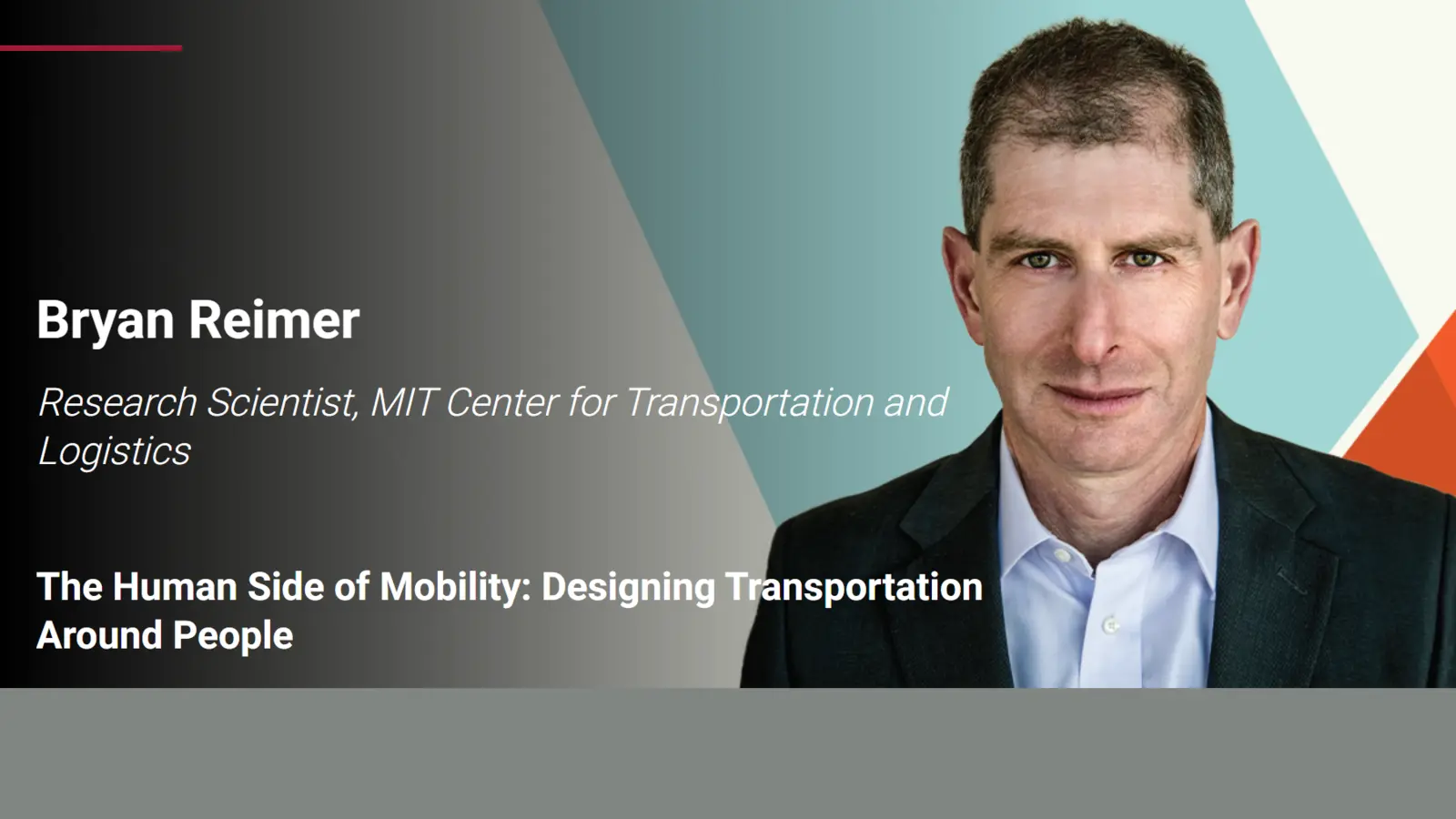
Bryan Reimer, a research scientist at the MIT Center for Transportation and Logistics in Cambridge, Massachusetts, doesn’t believe the best technology will replace people. Rather, it will help them get more done, more safely and more easily.
“Over time, my thinking has evolved from studying how technology distracts drivers toward exploring how it might actively support them,” Reimer said. “In short, let’s focus on the power of the positive. Rather than just preventing unsafe behavior, can we help make better decisions?”
That thinking traces back to graduate school about 25 years ago, when cell phones were becoming common and Reimer wondered how they affected driving behavior. The initial question has grown into a much wider examination of how people interact with challenging, ever-changing technologies.
For anyone skeptical of AI and its wildfire growth, Reimer points to areas where it can clearly help, such as driver assistance features that make cars safer. He said this view aligns with the U.S. Department of Transportation’s Safe System approach: meeting people where they are rather than expecting them to become perfect operators of increasingly complex technology.
For decades, Reimer noted, the industry has focused on making vehicles mechanically safer and increasingly automated. The next frontier is making them more responsive to human needs.
“The question isn’t how much intelligence we can put into a car. It’s how that intelligence makes driving safer, more understandable, and less demanding. To me, this is where consumer and societal value lies,” Reimer said.
“The question should not simply be how quickly we can remove the driver,” he added. “Full automation has tremendous potential, but so does using AI to make human drivers safer and more capable. We should be pursuing both, evaluating each on its demonstrated benefits rather than assuming one technological pathway is inherently superior.”
Beyond the Warning Light
Some of that intelligence is already on the road. Ford’s BlueCruise provides hands-free driving at a set speed, slows down in traffic and, in its latest version, can change lanes and return to the original lane without driver interaction.
Many Hyundai vehicles will suggest the driver take a break, displaying a coffee cup on the instrument panel after an extended stretch behind the wheel.
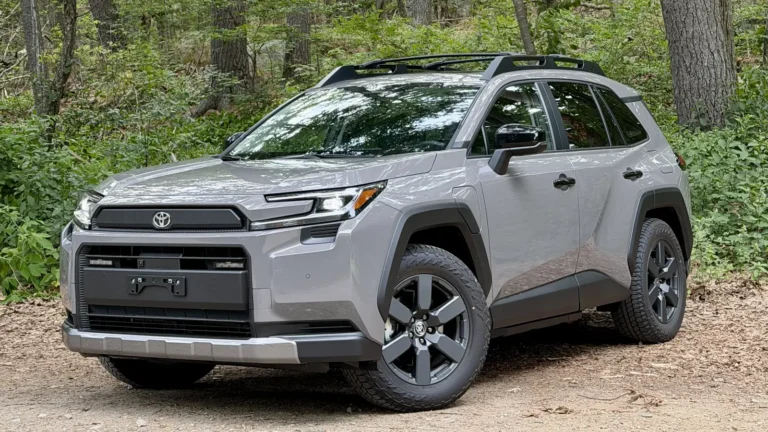
Toyota mounts a camera on the steering column that detects whether the driver is looking straight ahead. If a hand goes up to shield the eyes from oncoming sun, or the system catches an extended glance to the side, the driver gets a message to keep focusing on the road ahead.
Reimer sees these technologies as important steps, but only step one or two of a multi-step process. Today’s assistance systems, he noted, are still a long way from intelligent assistance that adapts to the situation.
Get it wrong, and the technology works against itself. When a system repeatedly interrupts people without providing value, Reimer said, it erodes trust and feeds what human factors professionals call alarm fatigue. Drivers start ignoring warnings and switching features off, losing the very benefits those systems were designed to deliver.
The opportunity with AI, as Reimer sees it, is to move beyond simple monitoring and limited intervention toward highly context-sensitive support: heading off problems before they develop, rather than warning people once they’re already in trouble.
Toward an AI Co-Pilot
Rear cross-traffic alerts that detect pedestrians and vehicles, automatic emergency braking, and camera systems that help drivers navigate tight parking lots and narrow streets all provide real benefits.
“Our research has examined how drivers divide their attention among camera displays, mirrors, and direct views while backing up,” Reimer said. “The question isn’t simply whether cameras provide more information, but whether that information helps people make safer, preferably more proactive decisions.
“The next evolution is a vehicle that helps drivers recognize what matters most and, over time, coaches them to become more aware of risks, without overwhelming them. One system warns you about a problem. The other has the potential to make you a better driver and work towards ensuring risky situations never develop, all in a package that you find enjoyable.”
This is the idea behind what he calls adaptive systems: technologies that interpret the person, the context, and the task, then adjust their behavior accordingly.
“Most existing systems perform specific functions based on predefined conditions,” Reimer said. “A more capable AI co-pilot could consider the driver, vehicle, and environment together, while learning what works best for the individual. Sure, there’s a little ‘OMG, do I want my car to know that much about me?’ reaction. But our AI assistants already learn a great deal through everyday interactions. The opportunity is to connect useful intelligence to positive, proactive assistance, while giving people control over their information.
“For example, rather than simply detecting that a driver has looked away, a system could assess whether their attention matches the demands of the situation and provide appropriate support. Looking away for two seconds on an empty highway is very different from looking away for two seconds approaching a busy intersection.”
People Aren’t the Weak Link
Many view the human driver as a flaw to be engineered out. Reimer disagrees. People make mistakes, he said, but they also read situations, expect the unexpected, and adjust when conditions change. Machines still struggle with all three.
The real problem, Reimer believes, is that systems are designed for a “perfect user” who doesn’t exist. “Real consumers rarely behave in simplistic ways. They adapt technologies to their own needs, find new ways to extract value, and sometimes use them in ways their designers never envisioned.”
To Reimer, those adaptations offer insight into the people behind the wheel, and clues to building better technology.
“Drivers differ in experience, physical capabilities, attention, preferences, and comfort with technology. Yet many vehicle systems treat everyone essentially the same,” Reimer said. “What works for an experienced driver on a familiar commute may not work for a newly licensed driver or an older adult navigating unfamiliar roads.”
AI Is a Tool, Not a Strategy
Reimer doubles down on the idea of AI as a tool, telling business leaders that AI in and of itself is not a strategy. Instead, he asks them where things are going wrong: what wastes time, what confuses customers, which errors keep repeating, and which decisions are hard to make.
From there, his five-step process can help get to the root of the problem:
- Try small experiments early.
- Validate by testing with real users and measuring results.
- Trust comes from evidence and openness.
- Govern with clear rules and accountability.
- Scale only after the technology proves itself.
“Make technologies earn the right to scale through demonstrated performance,” Reimer said. The goal isn’t to remove all uncertainty, but to replace assumptions with evidence that shows when to change course.
Finding the Value in Between
Transportation touches engineering, human behavior, money, roads, and government policy, and fixing one area can cause trouble in another. To work across those lines, Reimer has built four academic-industry consortia that bring together organizations that may compete in the marketplace but share challenges spanning technology, business models, and regulation. MIT serves as the neutral meeting ground.
Working with so many organizations gives Reimer the background and forward-looking vision to spot big problems and trends that no single company could tackle alone.
“Some of the most productive moments in my work have come simply from bringing stakeholders together and helping them see the problem from each other’s perspectives,” Reimer said. Often, he added, the answer is the value hiding between the different groups.
The payoff, for individuals and businesses alike, could be getting back time and energy.
“Think about a great co-pilot. It’s not someone constantly criticizing your decisions or insisting on taking control. It’s your best friend in the passenger seat, helping you recognize what matters, supporting you when needed, and knowing when to stay out of the way,” Reimer said.
“That’s the future of automotive AI I find most compelling.”