Across America and Back: Ford Super Duty Road Trip, Part 6
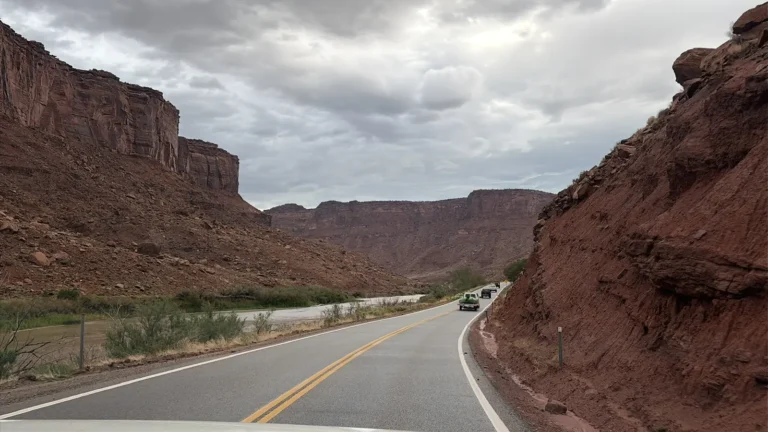
The metaphoric end of our coast-to-coast adventure—Route 66, Santa Fe Trail, Moab, Utah, and everything else—has to be Nashville.
It is still 1,300 miles to home in Maine, but that will just be a driving slog, battling the countless trucks and the traveling masses on the crowded two-lane interstates, not a fun ride with inviting stops every few miles.
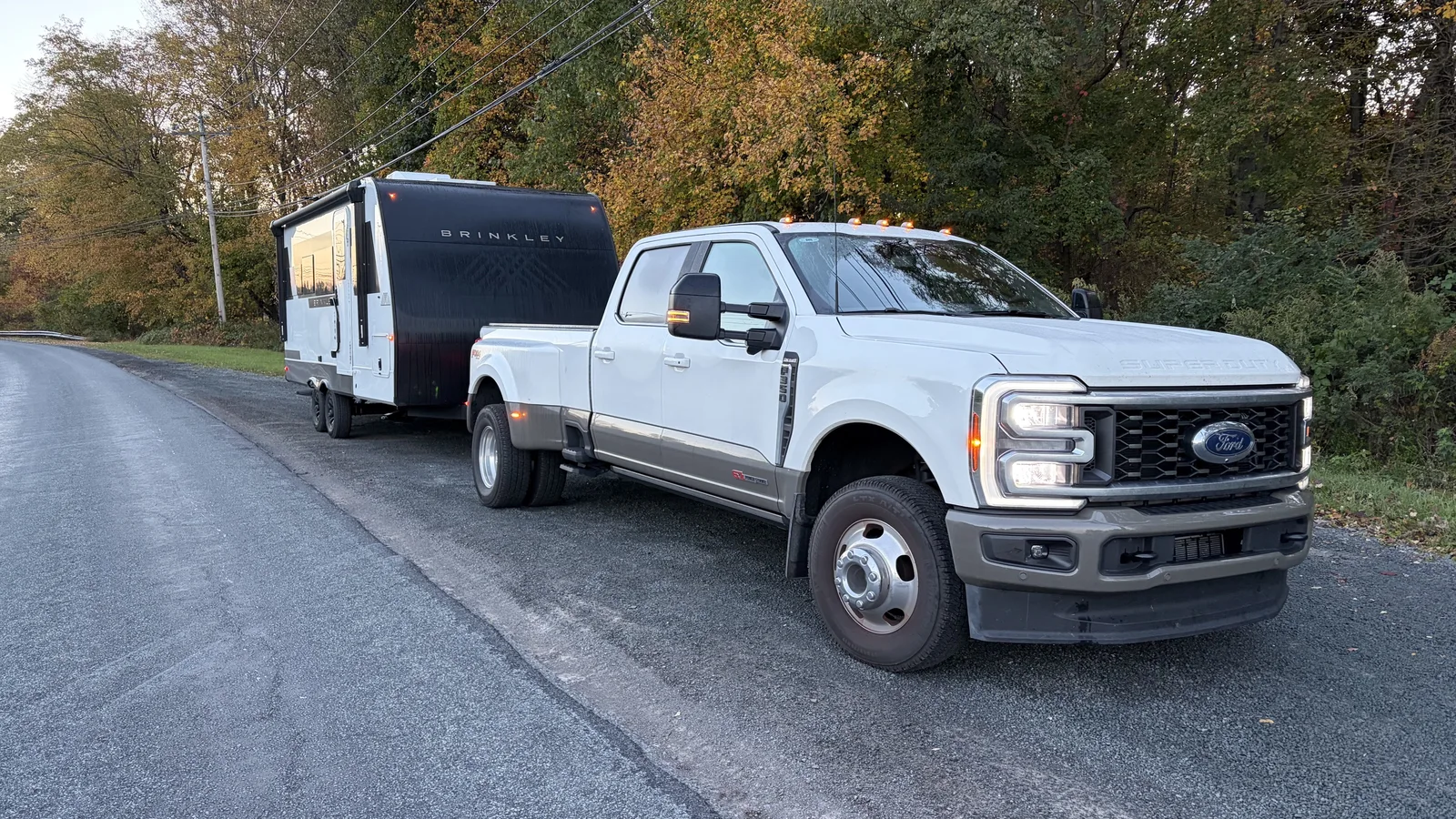
On Day 36, we are back where we started—at Matamoras, Pennsylvania’s RV Park, right next to I-84. The trucks rolling over the highway’s rumble strip do not make for a soothing sleep.
Our very dirty Ford Super Duty has ferried us 7,250 miles thus far—over 165 hours of actual driving time. We have been through 23 distinct states, some more than once, on this grand loop of America.
Strangely, the Ford’s polished aluminum wheels still look great besides the traveling grime on the rest of the truck. Huh…
The last two days reinforced my affection for the Super Duty’s extensive array of driving aids—particularly, the heads-up display and the dynamic cruise control. After savoring the open driving atmosphere—and the courtesy shared out west—we are back in the East Coast urban gridlock. I-40 east across Tennessee yesterday, and I-81 and I-84 today were simply packed with traffic. Employing the Ford’s driving assist systems—while hauling the trailer—is far less stressful.
Yes, the western roads have more open real estate, and far better planning. However, the larger populations and just the increased level of traffic in the east dictate better interstates are essential for safe, efficient travel. Clogged I-81 and packed I-95 in the East do not make for either safe or efficient travel. More lanes, improved bridges, (bridge expansion joints in the east are giant speed bumps) plus better interchanges and longer on-ramps should have been completed decades ago.
After seeing pond-raised catfish signs throughout Kentucky, plus too many “pot shops”, the bright lights of Nashville tell a very different tale. Yes, lower Broadway is a perverse experiment in American honky-tonks and country music (the visitors are perverse, not the sights), yet the revived neighborhoods on upper Broadway signal a city that is swiftly growing and modernizing from all of that tourist money.
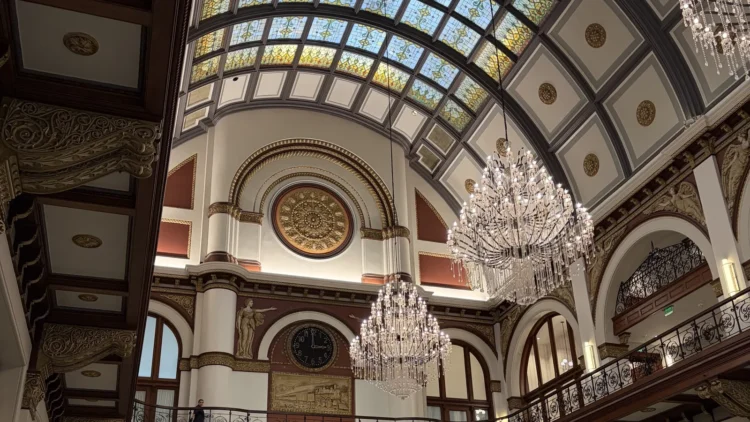
The revived Union Station Hotel—the beautiful former train station—is but one example, as is the new domed football stadium across the walking bridge and the Cumberland River downtown.
The cultural reach of the region’s reliance on country music is profound. Companies recognize that marketing pull. Yet Nashville is a vibrant city far exceeding what most visitors come to experience.
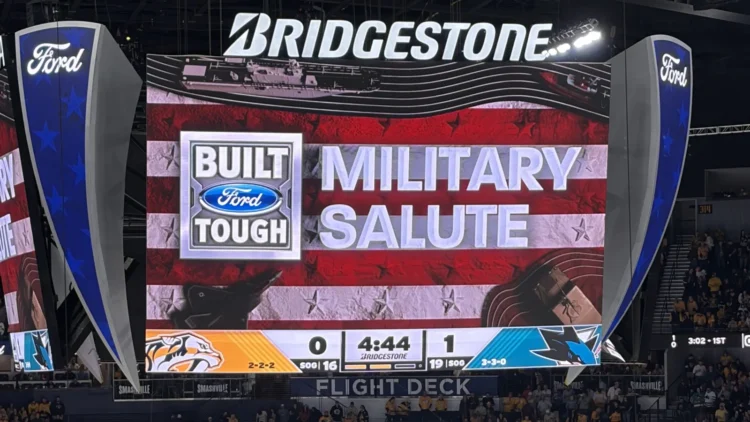
At the beautiful Bridgestone Arena in downtown, Ford plays a star role as a Predators hockey program sponsor.
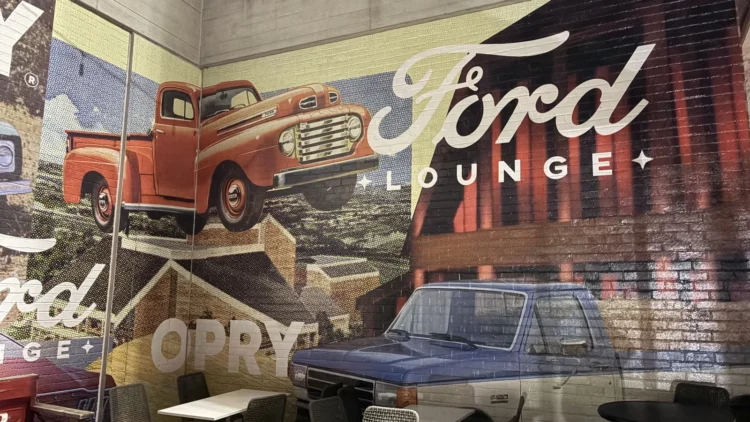
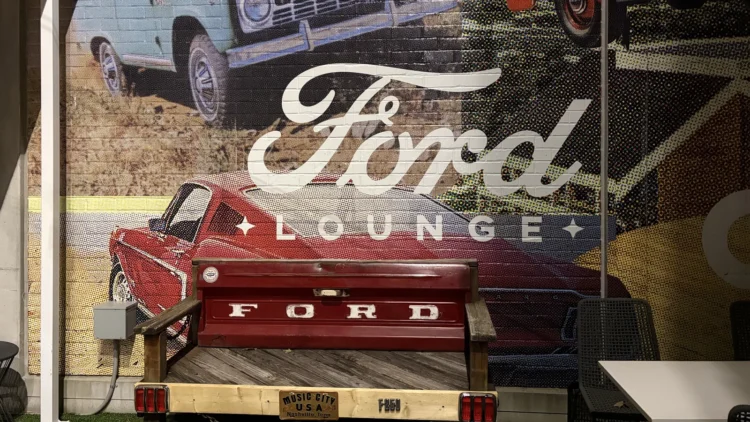
At the Grand Ole Opry, Ford sponsors the Ford Lounge next to the entrance, reminding visitors of the old Ford trucks that have appeared in many country music tunes for decades.
And, thousands of people pour into the Country Music Hall of Fame daily. This year, a new exhibit highlights several artists, including Clint Black, a long-time favorite country singer from Texas.
Black made his mark in the 1980s and 1990s while featuring his own personal 1960 Ford F-100 pickup truck in videos and on albums. This truck’s distinctive grille, rounded cab, and battered appearance aided his individualist image, along with his trademark attire.
In 1991, the old Ford broke down, and was unused for several decades until some of Black’s fans found the truck, restored it, and gave it back to Clint to still drive today.
Next to the story of Black’s Ford was this statement: “I learned early on not to strive for perfection. Perfection is an accident. Excellence is attainable. If you’re striving for excellence, every now and then you can get perfection,” Clint Black.
Parts of our five-week trip felt the same way. We strived to see everything, visit everything. Yet, it’s impossible.
But we saw so much. We captured the essence of Route 66 and all of its American glory. We saw more of our great culture in unexpected places: the National Show Horse events at the Illinois State Fairgrounds, the private tour of the 1699 Catholic Mission in New Mexico, the three young sisters running the Conoco Diner in Shamrock, Texas, and how could we forget the eight outgoing Brazilian couples that we met on the dirt trails outside Moab, Utah. We met many great folks along the way, happy people all across America—and many of them not from America.
We left the salty shores of the Gulf of Maine—the Atlantic Ocean, and waded into the warm waters of the Pacific Ocean. We crossed several of the country’s major rivers, traversed the Continental Divide, twice, and we had no vehicle breakdowns! It hasn’t really sunk in, the scope of our trip over 37 days.
Route 66 transformed American travel in the 1920s and 1930s, just like the Santa Fe Trail transformed ‘trade’ and commerce in the Wild West from Missouri to Mexico. The Mormons transformed Utah—capitalizing on its landscape—while we revel now in its outsized beauty.
We, Americans, have always been wanderers, adventurers. This pursuit seems to be part of our DNA. And we certainly have the country in which to do it.
Our Ford was a perfect conduit for our explorations. The four-door cab handled extra gear or passengers equally well, the eight-foot bed collected souvenirs and other detritus, while the Power Stroke engine made every mile, no matter what the elevation, a walk in the park. Ok, so maybe the diesel fuel expense melted my credit card (and can we get that silly Urea/DEF emissions additive fluid situation reversed??), but the ease of how the Super Duty pulls any trailer makes that a very sane trade-off.
I felt envy from other drivers as the Ford gracefully pulled past them on long grades, with not a hint of strain.
Would we do it again? Would we do anything different?
Yes, twice.
Our plan was very ambitious, yet we had great weather—only five out of 36 days with rain and half of our wardrobe unused. Some of the rain was downright scary, like crossing Sitgreaves Pass in flooding rains. When they issue flood warnings out west, they aren’t kidding around.
Did we miss some things? Sure. Could we have been more targeted in our visits? Sure again, but then you also miss the little unexpected occurrences that can really shape any trip. Like Moab, really all of Utah, which warrants another much lengthier visit.
Driving up and down the East Coast—my third such effort in less than two months—is frustrating, almost exhausting. Unless you can be carefree, not worry about your time or pace, by all means, get behind the wheel. It would however be nice to have a giant recreational rental center near a Midwest airport that offers everything you want for extended travel and adventures, and then you just swoop in off the big bird in the sky and off you go, skipping the whole East Coast driving morass.
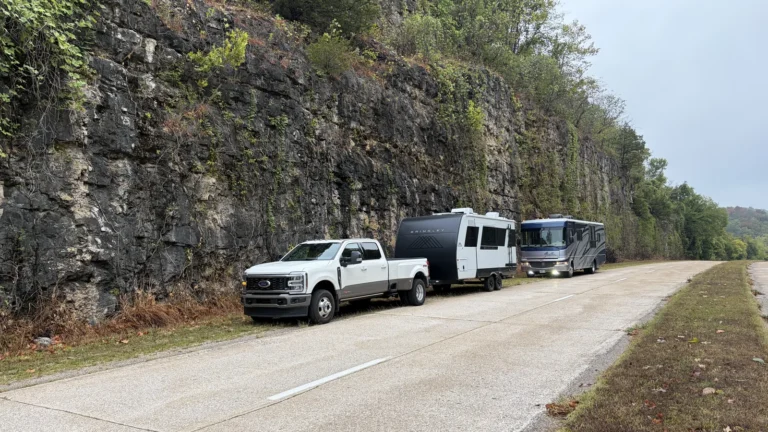
The camper versus RV versus your car issue for extended travel is really more about personal preference. Having spent five weeks in a 20-foot camper was very doable for us—and a whole lot better than the tenting we used to do!! Yet what we saved on hotel rooms—we averaged less than $60 @ night in RV parks for the whole adventure—we spent in fuel hauling our hotel room around.
Sure, it is extremely convenient to have access to your bed, bathroom, and kitchen at any time. Eating out is expensive and a time-suck; home-cooked meals keep your mental batteries appropriately charged. In five weeks, we ate dinner out only five times.
But, sometimes, your RV/Trailer doesn’t fit where you want to go. If fitting big rigs into small spaces is taxing for you and your spouse, then the RV/Trailer experience is not a good option, as many travel destinations are snug, crowded, and often with parking restrictions.
The flip side of this equation, I would rather drive the hotel room (a Class A or Class C RV) and tow a car/Jeep behind the RV rather than have a big truck towing the camper home. Your car, any car, is vastly more suited to the rigors of being towed—more suspension compliance, more aerodynamic, more rigid body—than towing your house across sections of our interstates that are simply deplorable.
Of course, your accountant will tell you that RVs/Campers make no sense for travel when you factor in the initial buy-in—and all of the pieces you will need. We had thousands in unexpected additional cost after purchasing our trailer—which depreciates faster than your new car. Rent a car/truck/minivan/Suburban with unlimited miles and just hit the road.
And that is the gist of the story; get out there, find your own slices of America—while you can. We have a rich history, a country full of lessons, an America that wants to be discovered! Go make your own memories.