Muffler Men, Porsches, and Dirt Roads: Route 66, Part Two
Clip-clop, clip-clop, clip-clop—the rhythmic sound of six big tires slapping against the aged cement surface of America’s most widely recognized road varies from soft-spoken to jolting reactions as our Ford F-350 Super Duty works its way southwest through Illinois.
After easy, smooth-flowing Ohio—the best I-80 surfaces we have experienced—Indiana and Illinois illustrate what happens when our interstate system is not properly cared for. Exploded truck tires litter the sides of the highway, while our Brinkley travel trailer rebounds sharply to the uneven, and often broken, expansion joints of the numerous bridges.
Different from continuous bituminous roads, concrete surfaces have seams, and the sound of a prancing horse accompanies every mile.
As we start our extended journey down the lost segments of infamous Route 66, John Steinbeck’s “Mother Road” also shows the neglect of being ignored by many politicians and drivers since being de-labeled in 1985.
But this year, wowzah, has the old girl come back to life.
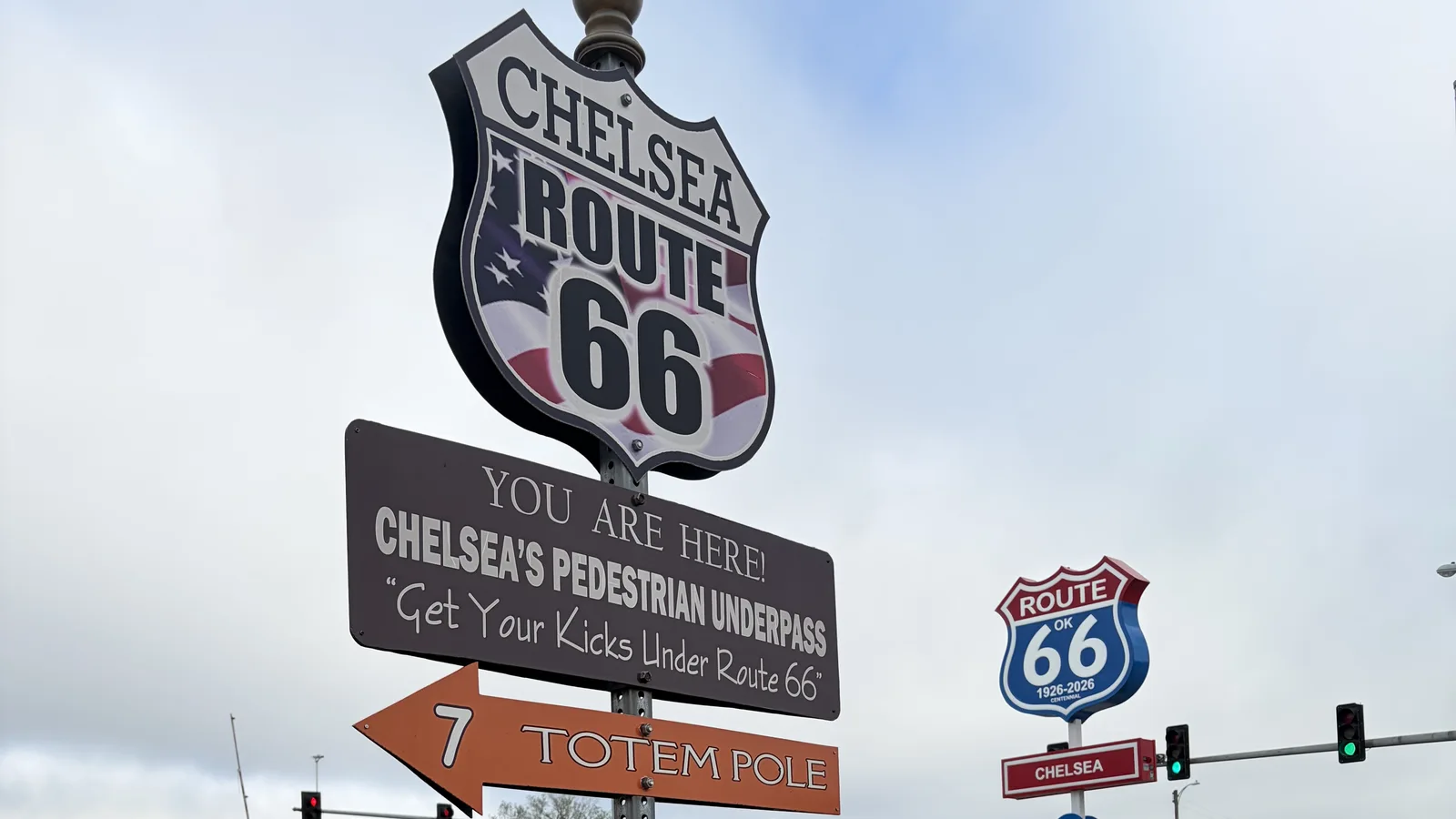
Every small town has new banners, signs, and messages announcing the 100th anniversary of this storied route. New department of transportation signs—in every state—tell drivers that they are driving on original Route 66 or Historic Route 66. Often confusing, but always interesting, we frequently choose the route less taken and join folks from all over the planet on the same pursuit—taking in everyday slices of real American-ism.
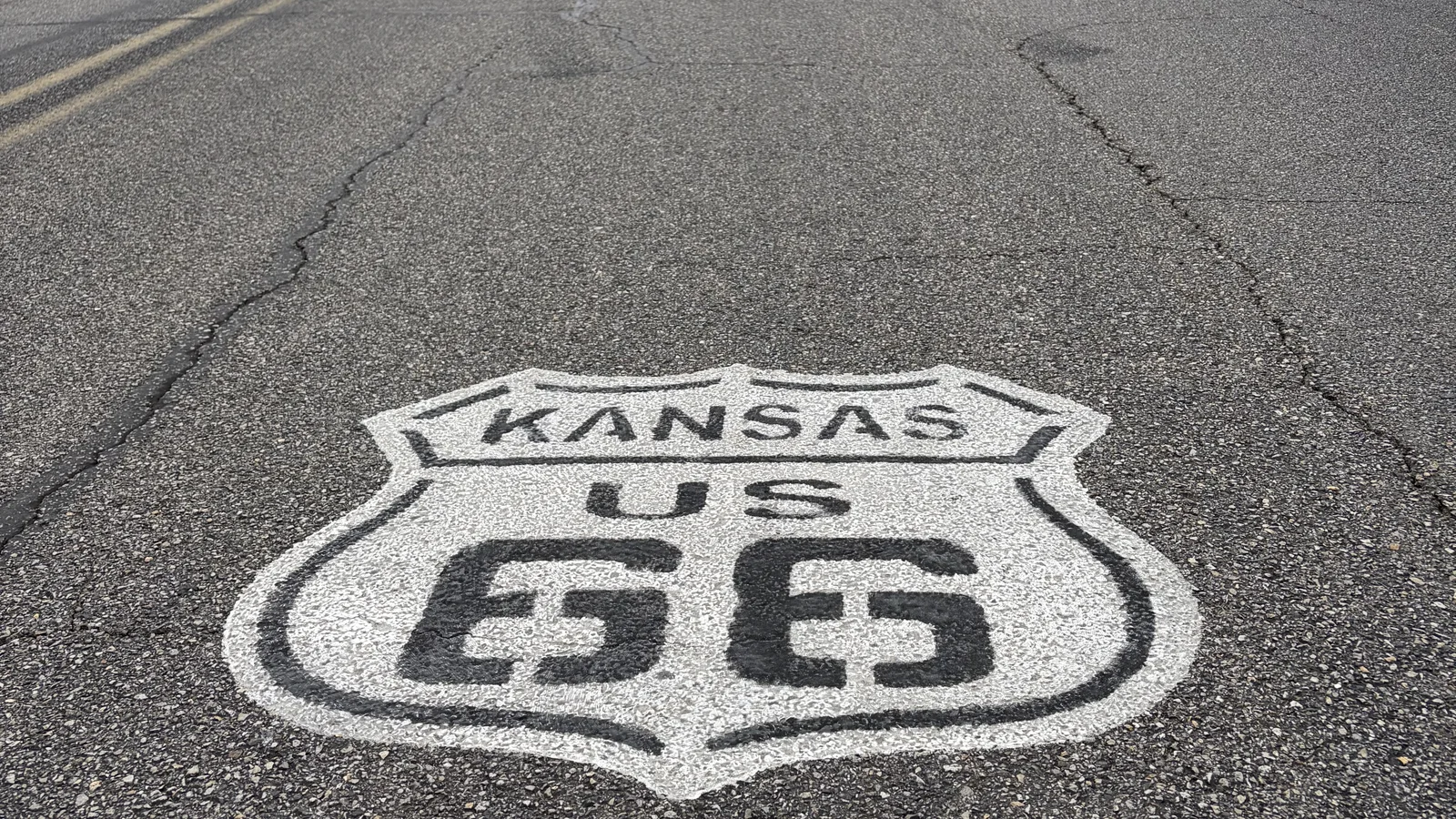
After informative visits in Joliet and Springfield, Illinois—where the state fairgrounds surprised and entertained us for two days before visiting with Abraham Lincoln’s history for a day—we still revel in the small delights found in the modest villages bypassed by the interstates. Still relevant to the masses forging a living on farms, the trucking companies and quarrying operations, plus the ever-present trains, rural America works.
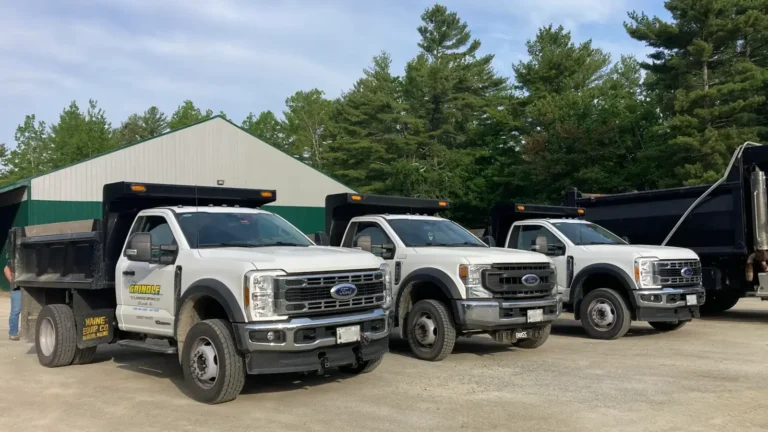
Each day, the Super Duty joins fleets of other Ford work trucks. Every trip, every venue, every fuel stop, we are surrounded by Ford Super Duty trucks. Easily 75% of the work trucks that we witness—most hauling heavy trailers—are diesel-powered Fords.
At every campground each night, the big fifth-wheels are often being pulled by Fords.
Is it the smooth powerband of the Power Stroke engine? The seamless shifting of the 10-speed automatic? Is it the oversize graphics on screens and controls? Perhaps it’s the cooled seats in the constant 90+ degree heat.
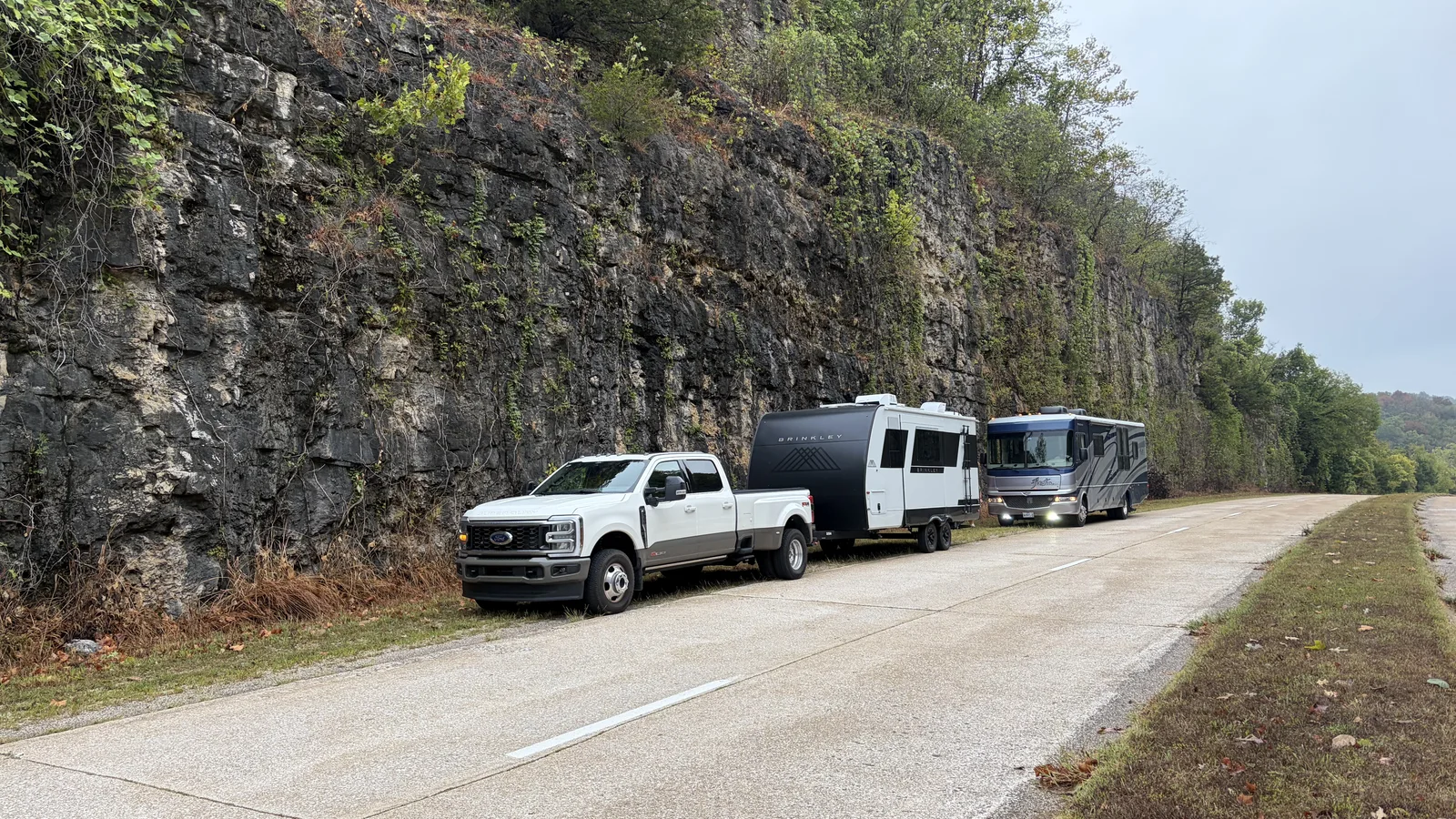
It could be the solid tracking running down the narrow nine-foot lanes of the original Route 66, where the Ford never wavers from its path. With chain sway bars connected to the Brinkley, we stay straight as an arrow on a 20-25-mph windy day on the freeway.
The Ford works just like the solid bridges still carrying heavy farm equipment, built over 100 years ago. We might get rock and rolled by the surface, yet truck and camper gracefully pursue their appointed rounds.
As we push past St. Louis after visiting the Arch, but missing the Chain of Rocks Bridge with its infamous curve, the terrain becomes more interesting. The Ford’s cruise control holds steady at all speeds, but most impressive is how the dynamic cruise control recognizes slowing traffic one to two vehicles ahead of us, and reacts accordingly before the drivers of those vehicles do. This has saved us more than once as highway speeds suddenly change.
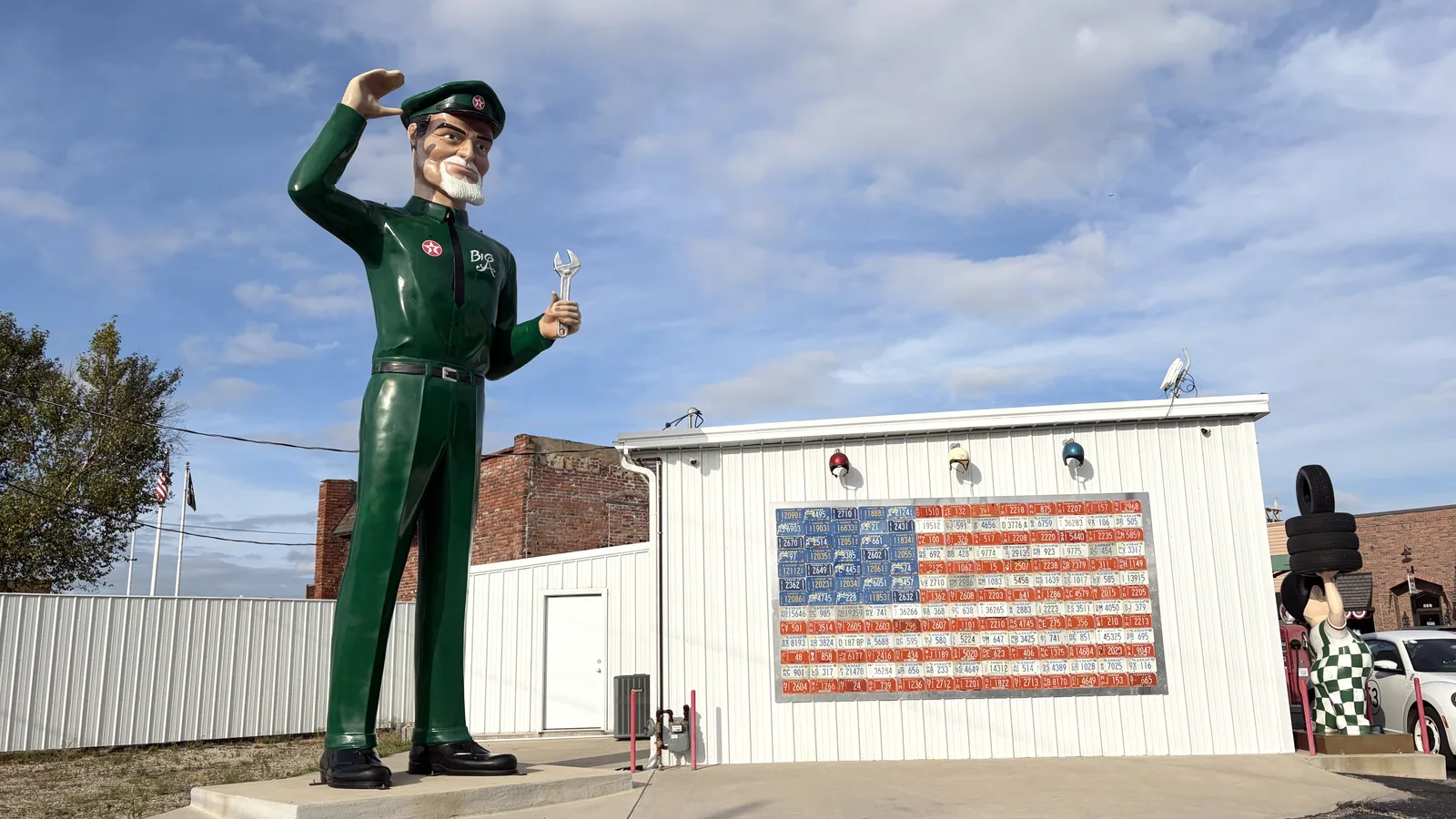
In Missouri and Oklahoma, the car culture nature of Route 66 is visible every few miles. Car collections, relics from the past, okay, junkyards, are everywhere. Wrecks from the 1930s, old Model A’s rusting away, and buses from the era when they owned Route 66, carrying the bulk of people that needed to move around the Midwest.
We see 5-window GM pickups waiting for restoration. One ‘collection’ has an original Datsun 240Z stuck atop a pipe—a metal rod through its heart.
By Oklahoma, we learn of another name for Route 66—The Will Rogers Highway. This noted veteran, singer, writer, and media personality was beloved by his fellow Americans. He is honored still by many Route 66 signs, as his name was the official roadway’s name for several years after his untimely death in 1936.
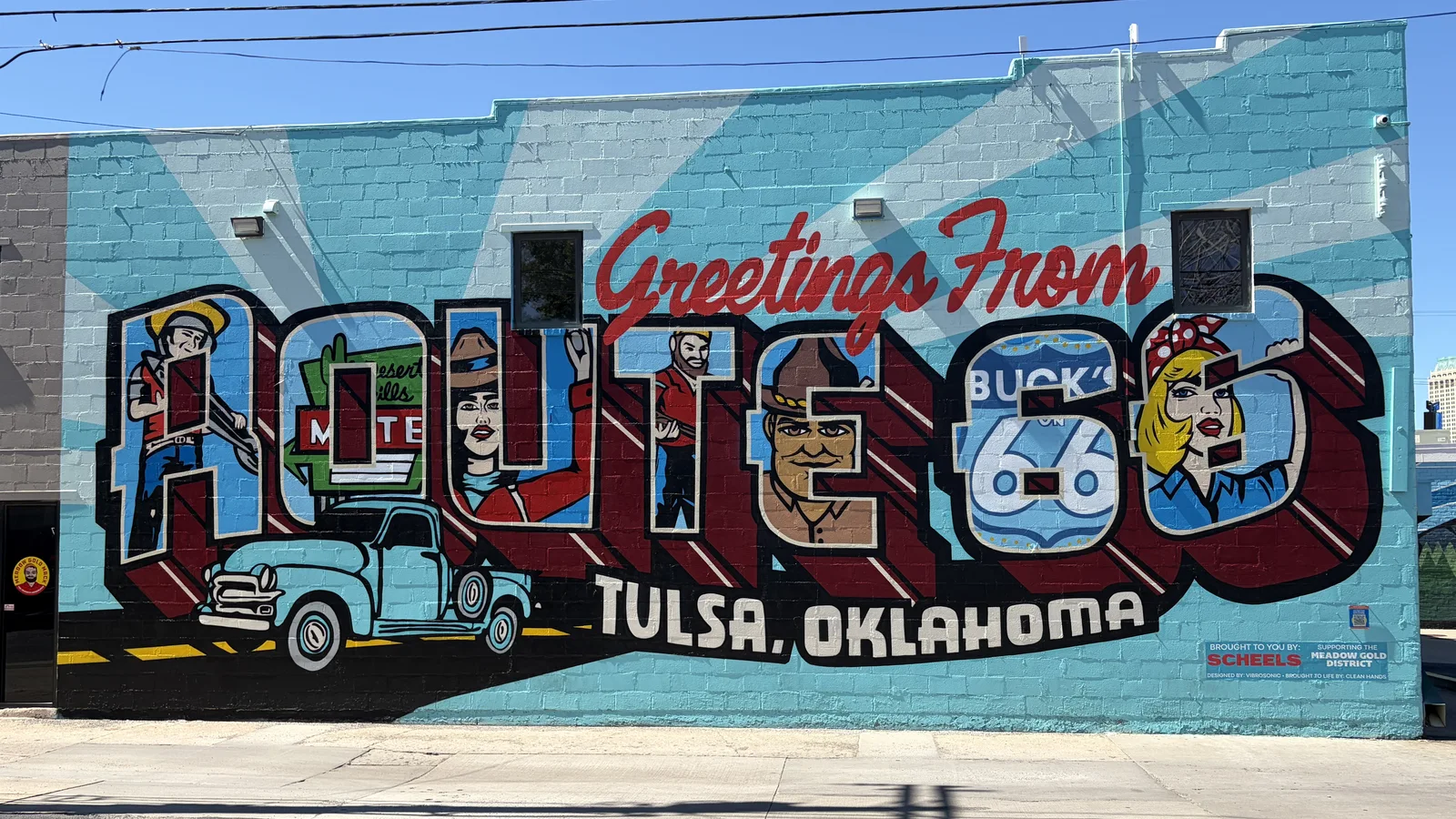
Tulsa, like Atlanta, Illinois, has a large collection of the Roadside Giants, the “Muffler Men” statues that are often associated with Route 66. In Tulsa, the collection of “Giants” cements a whole block of revived neon signs and Route 66 memorabilia. The logbooks at the merchants tell the story of how Route 66’s popularity is worldwide, with guests from Ireland, Italy, Germany, the UK, Brazil, Japan, even a guest from Cambodia! In Tulsa in September, who would have thunk it that so many people from so far away would want to experience “The Mother Road”?
A day later, we see seven antique, series-two Porsche 911 coupes three different times. These invaluable air-cooled engined collector cars have no air conditioning, and are pounding over broken sections of narrow cement Route 66 roads that the Ford—and its companion camper—are bouncing up and down on.
This scenario (of repeat visits with drivers) was repeated over and over as we visited as many of the unique roadside attractions that this historical road can provide.
The Amazon logo-ed tractor-trailers in Ohio, Indiana, and Illinois have been replaced by big trucks hauling equipment in Oklahoma. Wind towers are becoming prevalent on the horizon. As we approach Texas, the view increases in every direction—giant transmission lines, hundreds if not thousands of wind towers—plus the old fossil fuel pump-jacks and derricks, still supplying oil and gas.
After a visit to the excellent Route 66 Museum in Clinton, Oklahoma, a travel stoppage on I-40 West forces us to make an alternative route selection. Joining other traffic, we exit back onto Route 66, which becomes clogged. The narrow road is full of trucks, campers and commuters—perhaps like the old days, waiting for cows, construction, or a crash?
We elect to go to Plan C; Brad takes his RV left onto a dirt road. We go right, onto another dirt road—first one to the RV park cooks the steak. Brad chooses wisely.
We travel 20 miles of dusty, dirt roads but to get to see more of the real Oklahoma experience. Huge ranches of Black Angus cattle, derricks and pump jacks and pipelines are all over the expansive terrain. And it’s obvious, we made the wrong route choice as no one is in front of us, and, we aren’t sure, but no one is behind us in the thick plume of dust.
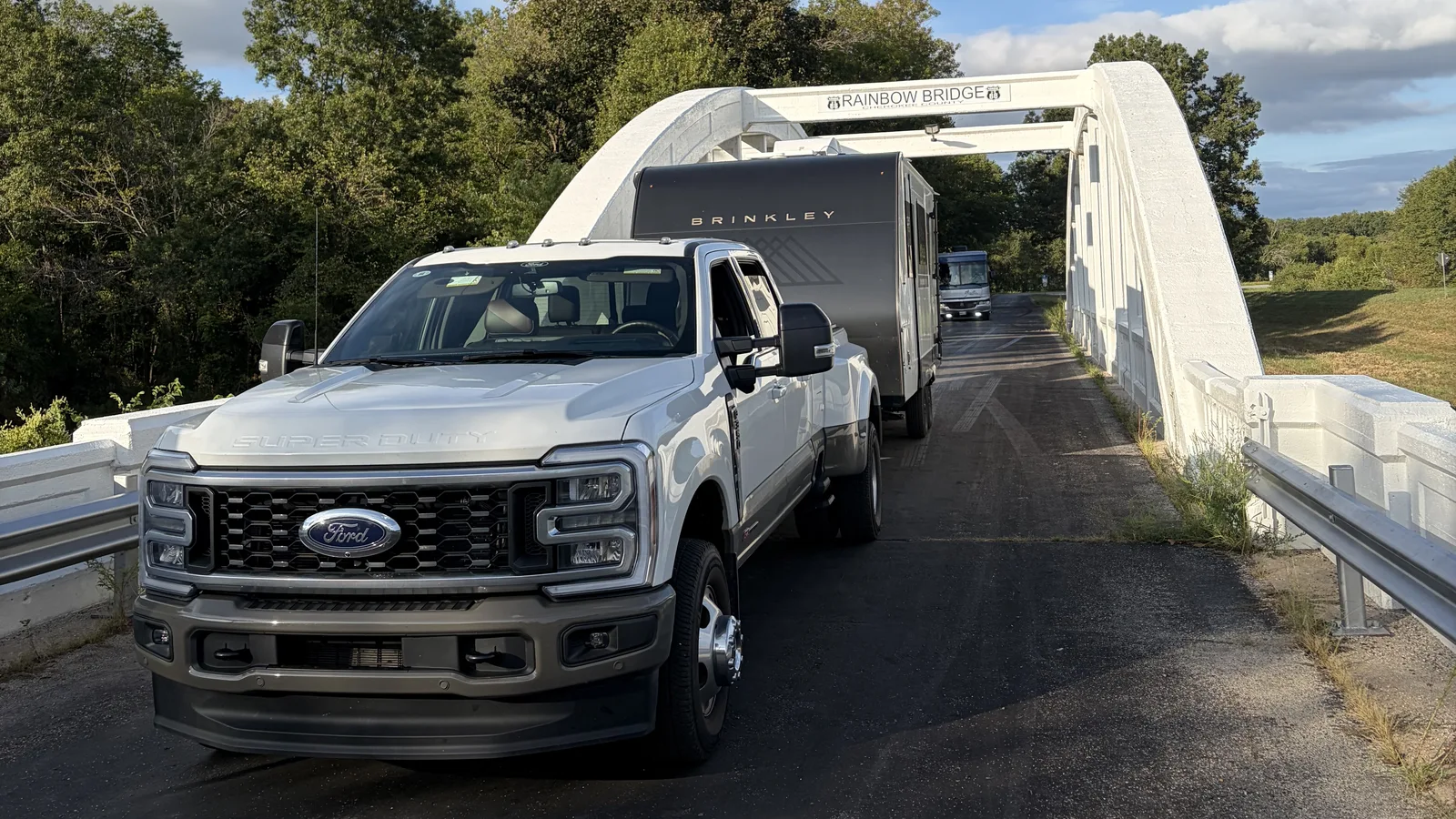
Back on original 66, we see more antique bridges and experience the nine-foot lanes. If we meet big vehicles, the right side dually tire rides up on the cement curbing, creating a unique handling effect magnified by hauling a twin-axle trailer. I don’t recommend trying it.
At the RV park, our camper is a dust-covered mess, the inside covered with a patina of dirt because we neglected to close the inside vent….
But it isn’t the attractions or distractions that make the Route 66 experience so impressive. It is the people. At every stop, they welcome us, talk with us, and love to share their stories. The value of Route 66 is in its importance to who and what we are, where we came from, not from the schtick-y roadside attractions that often have surprisingly complex backgrounds of individuals taking lemons and making lemonade.
Maybe that’s the Ford’s greatest virtue. Bringing the people that own them and work them, to all of the other people that need what the Ford delivers.
Our Super Duty is sure delivering for us. Millions of Americans want the best tools they can use, and the Ford is proving to be a great tool to have in our traveling toolbox.